Cuiú Cuiú Project

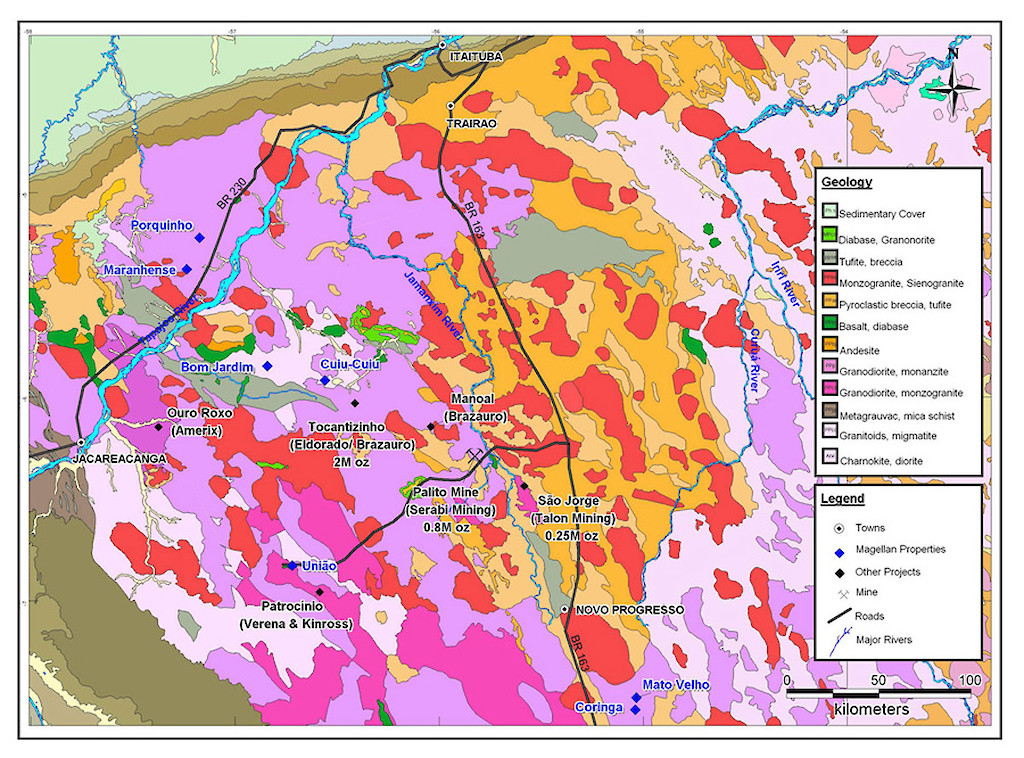
Located NW of GMining’s TZ project

Overview

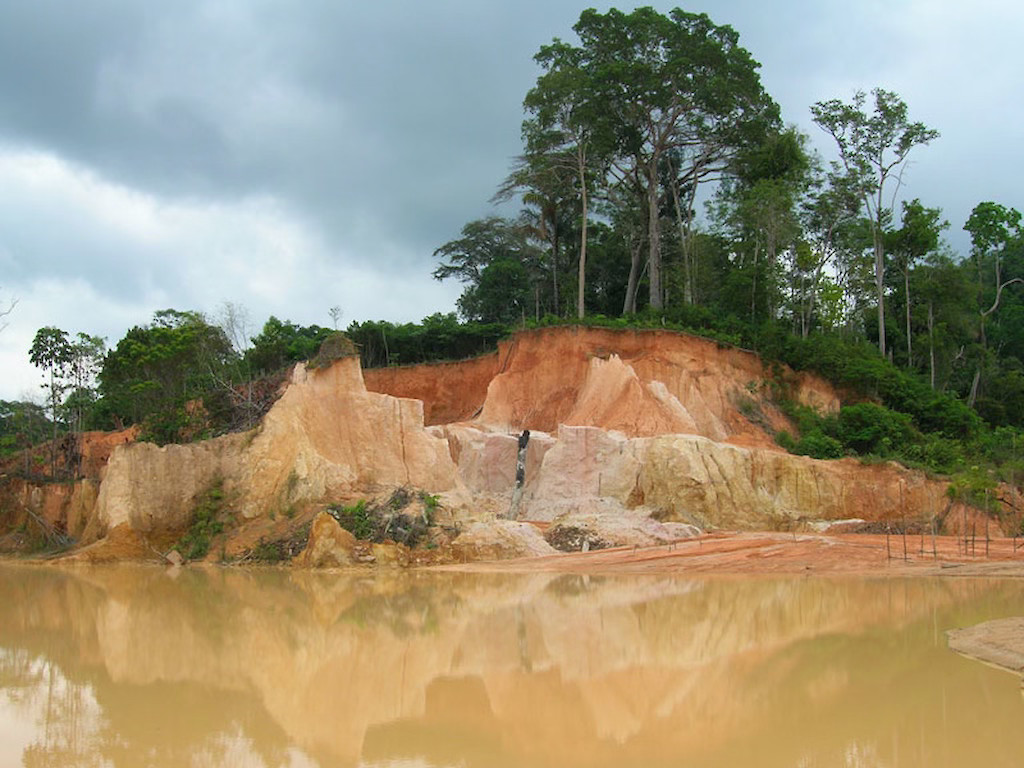
The Cuiú Cuiú gold project consists of several shear zone-hosted gold deposits that occur within granitic rocks of the Cuiú Cuiú Complex (2,015 Ma), in the Tapajós Region of northern Brazil. This region was the site of a major gold rush by artisanal miners from the late 1970s until the late 1990s which, according to the Brazilian Department of Mineral Production (DNPM) had a total historical production of between 20 and 30 million ounces of gold. Cuiú Cuiú was one of the earliest and largest garimpos in the province.  Moreover, Cuiú Cuiú reportedly produced 10x the gold of GMining’s adjacent Tocantinzinho project from artisanal workings during the Tapajos gold rush.

Cuiú Cuiú is estimated to have previously produced 1.5 – 2Moz of placer gold (Source: DNPM) and is located approximately 25km NW of the Tocantinzinho project which has Proven and Probable Reserves of 39.6Mt @ 1.4g/t gold for 1.8Moz. The project has M&I resources of 48.7Mt @1.35 g/t gold (2.1Moz) and Inferred resources of 2.4Mt @ 0.90 g/t gold (0.1Moz). The Tocantinzinho project is owned by GMining and is currently Brazil’s third largest gold mine.

The area at Cuiú Cuiú which has been subject to most of the previous exploration efforts is approximately 5,500 ha (11 km by 5 km) in size. Previous work on the property included geological mapping, extensive soil sampling, rock sampling, airborne and ground geophysics, power auger drilling and diamond core drilling.
Summary

Location

Tapajos Gold Belt, Brazil

Hard Rock Resources

Indicated resources of 12.29Mt @ 1.14 g/t gold (450,200oz)
Inferred resources of 13.63Mt @ 1.04 g/t gold (455,100oz)

Oxide Resources

Indicated resources of 13.56Mt @ 0.50 g/t gold (216,182oz)
Inferred resources of 6.40Mt @ 0.34 g/t gold (70,569oz)

Status

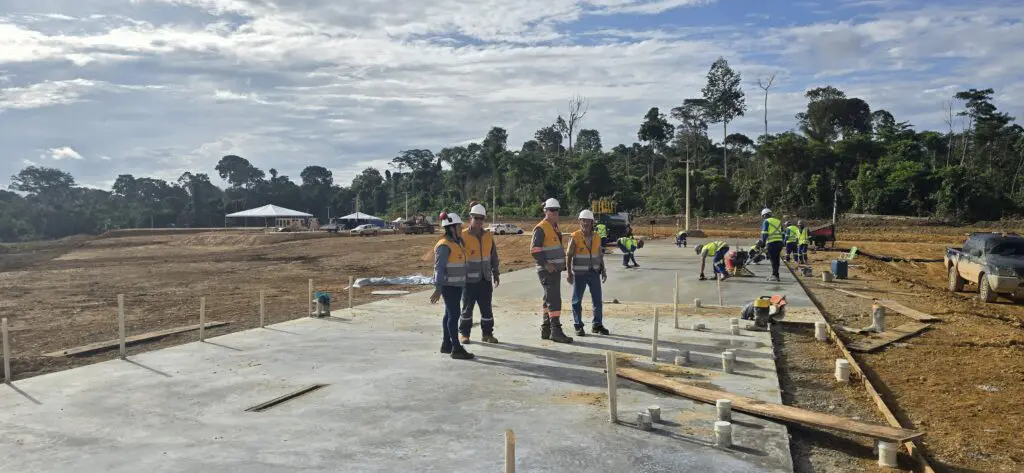
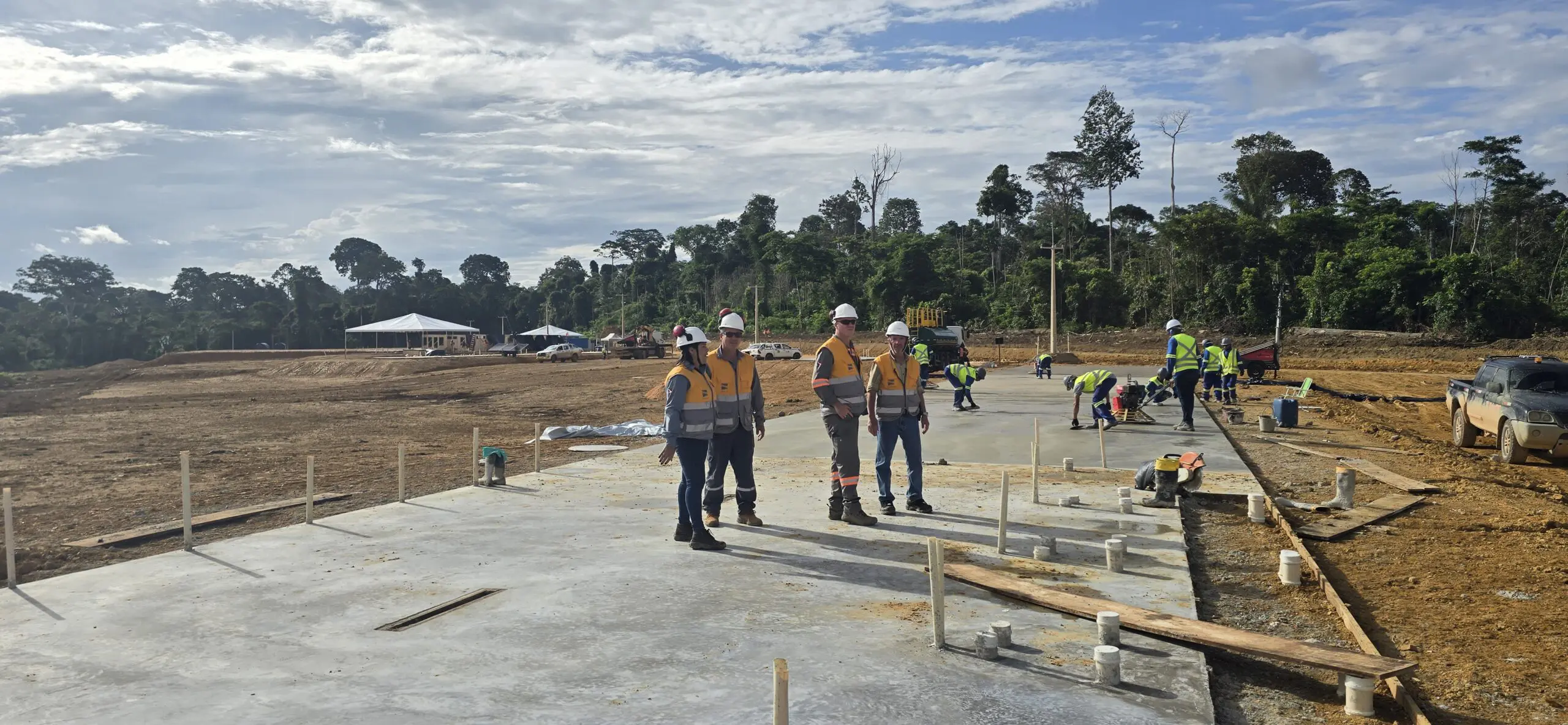
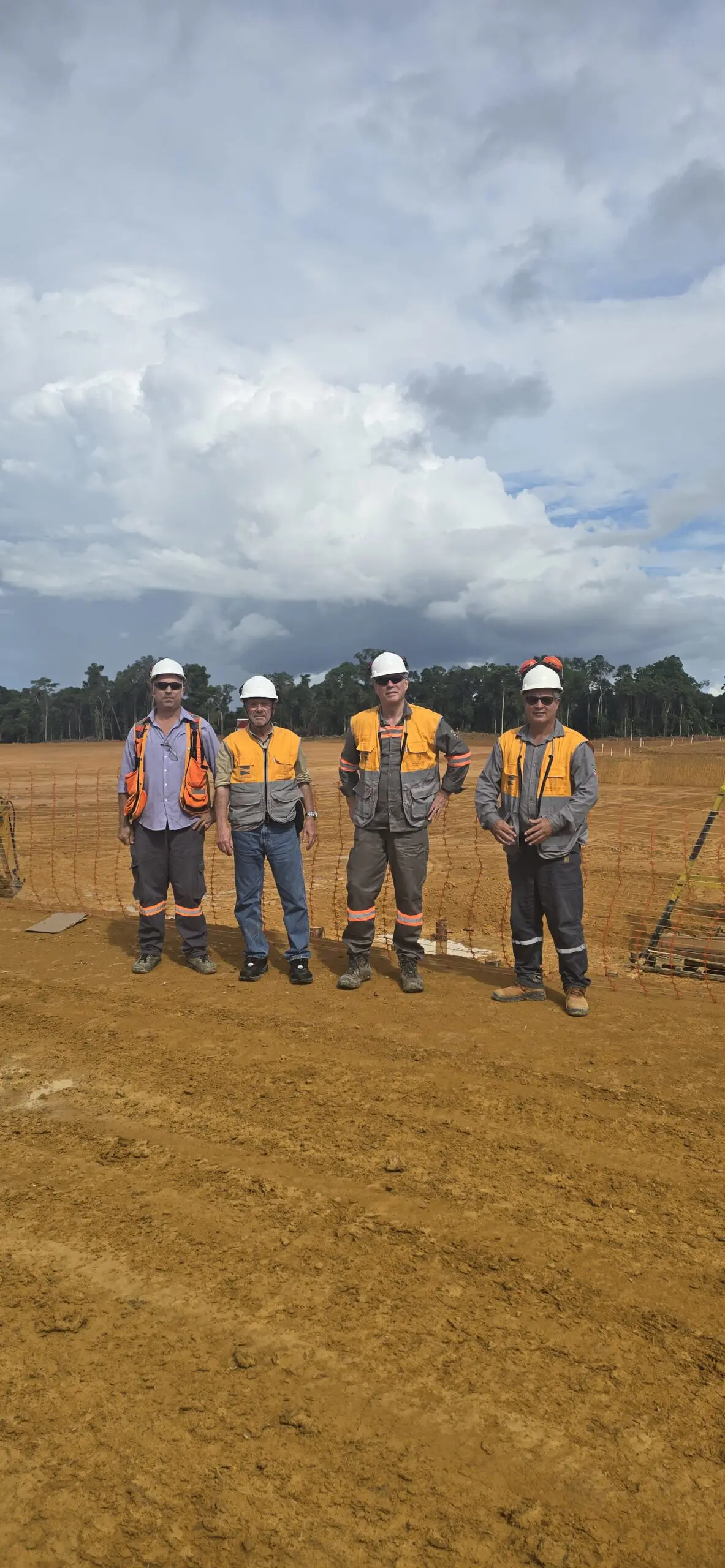
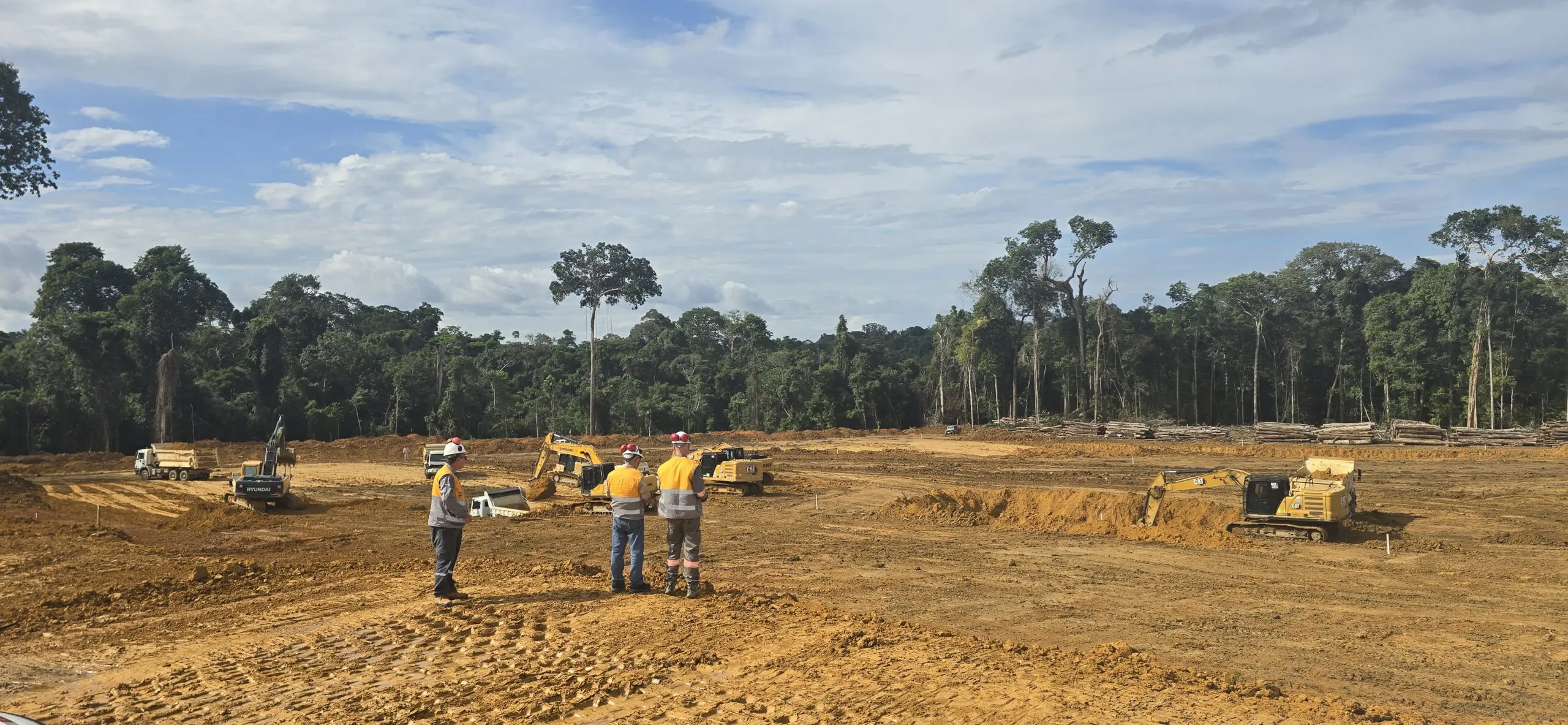
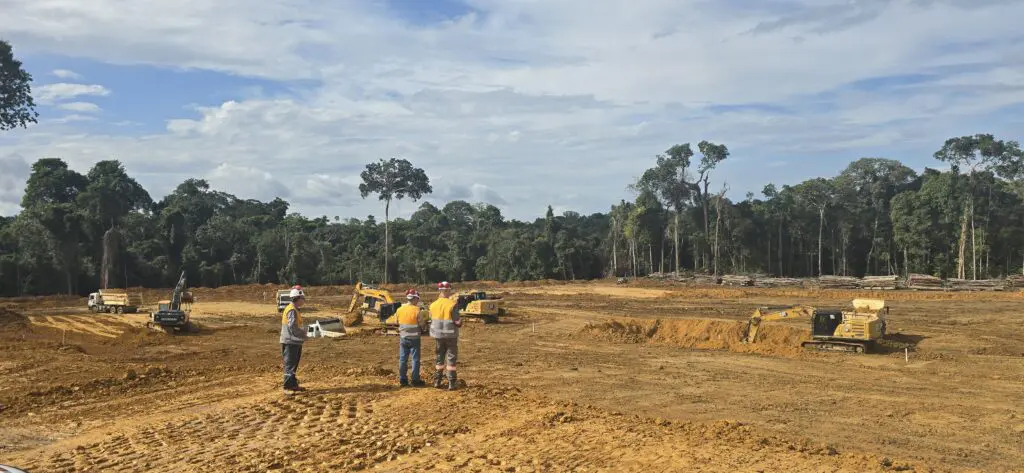
Phase 1 operation to mine oxide material under construction
3 exploration drill rigs targeting expansion of hard rock resources

Pre-feasibility Stage 1 financial metrics

Capex : US$37.7M After-tax
IRR: 78% (at $2,500/oz)
NPV₅:  $74M (at $2500/oz)
All-in sustaining costs: US$1,210 / oz
Initial production: 25,000oz / year

Commencement of Phase 1 Commercial Production

Q4 2026

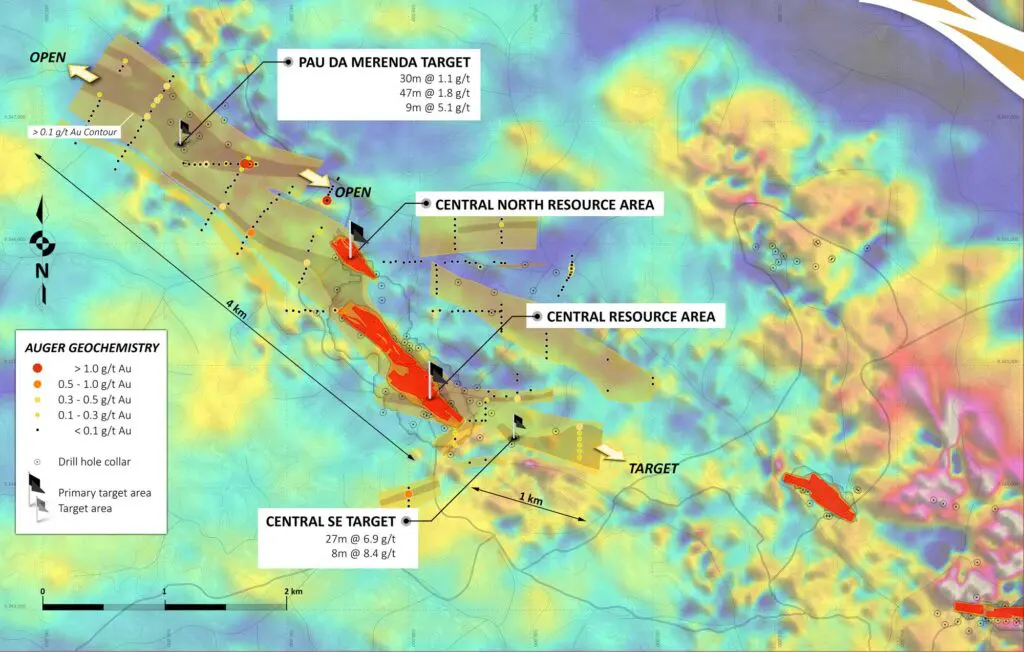
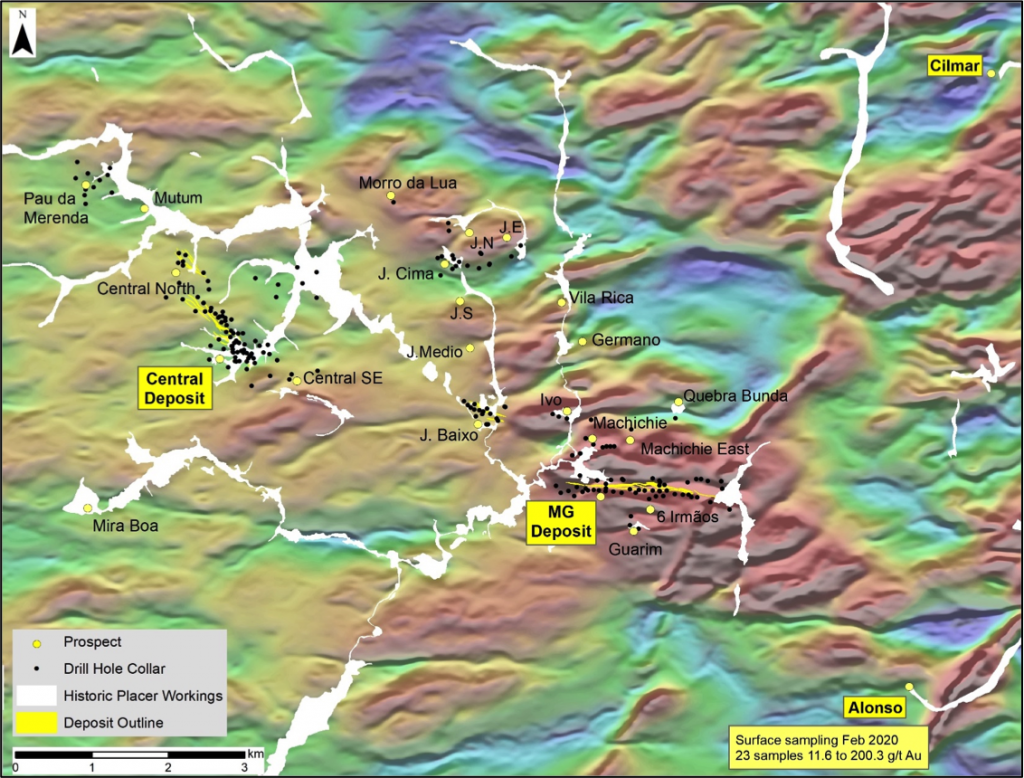
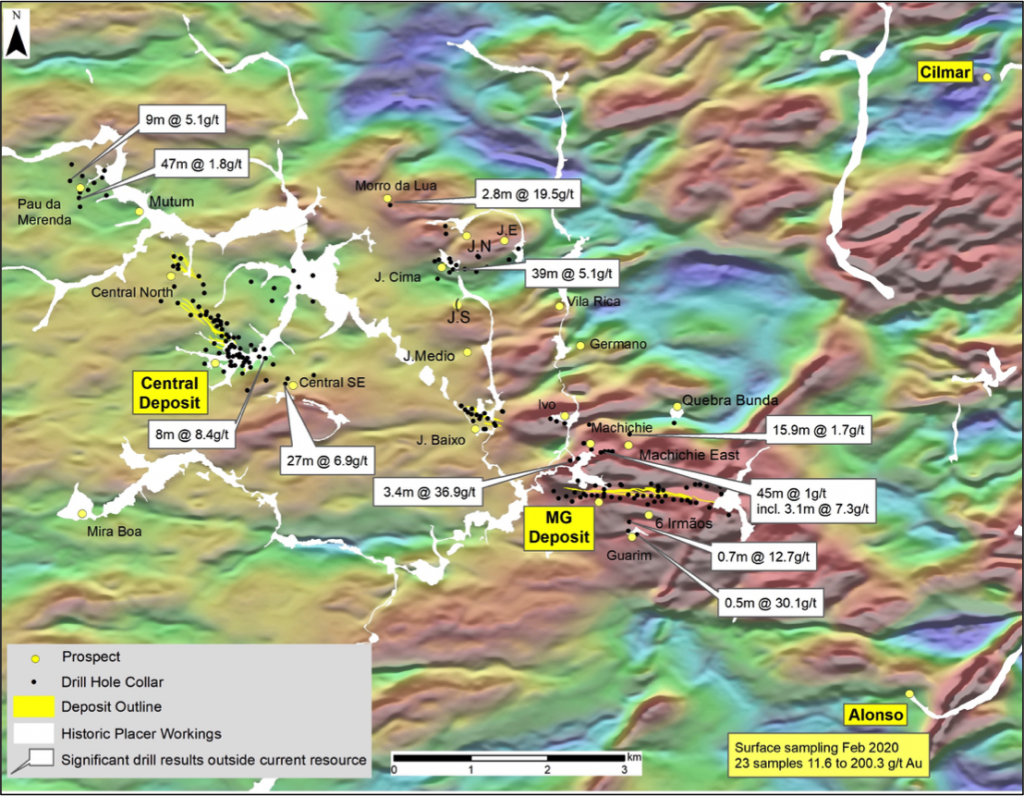
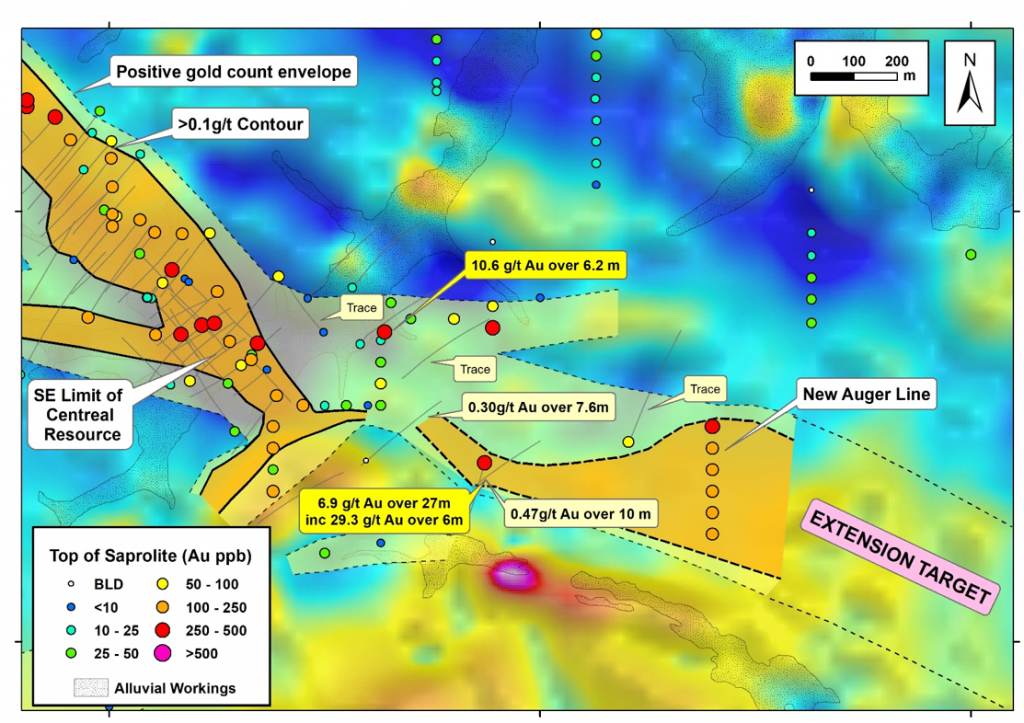
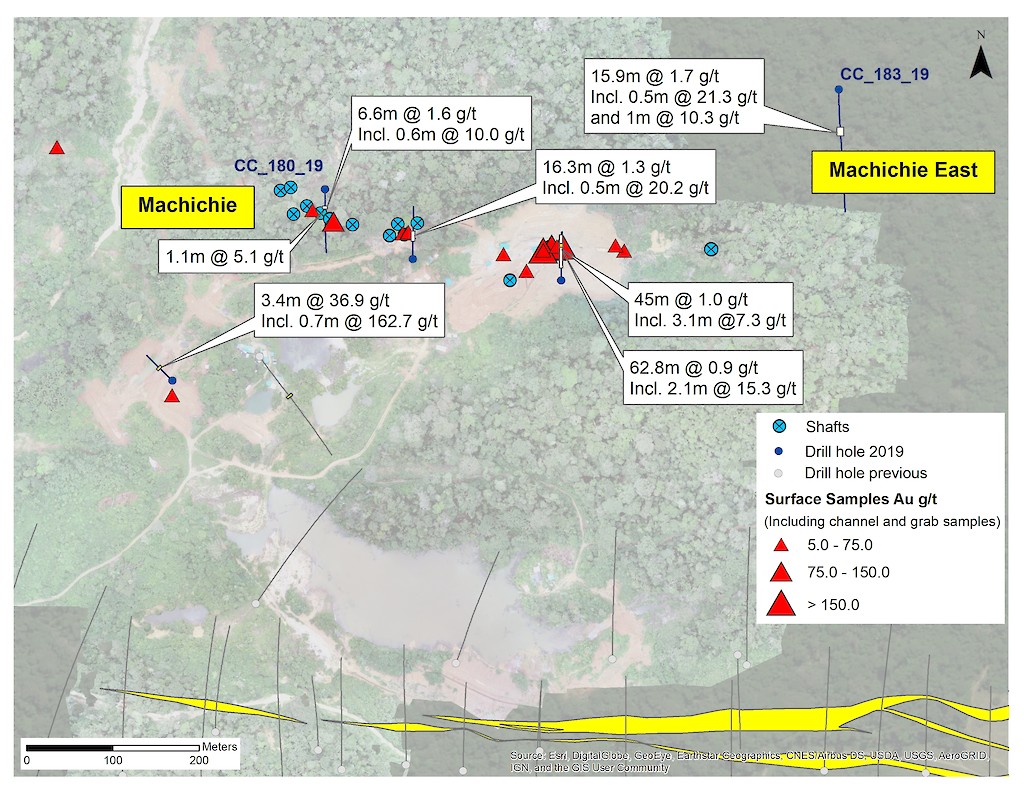
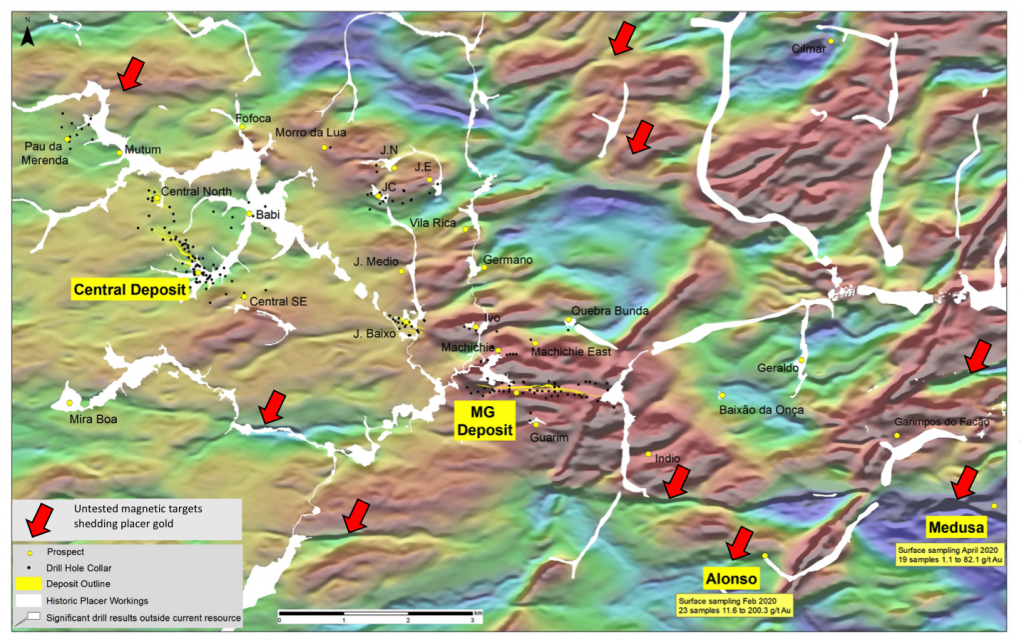
This work has so far defined two main gold deposits at Cuiú Cuiú; Central and Moreira Gomes, which are 5km apart, four discoveries at PDM, Machichie Main, Machichie NE and Jerimum Cima, which are advancing towards maiden resource estimates and +50 additional exploration targets

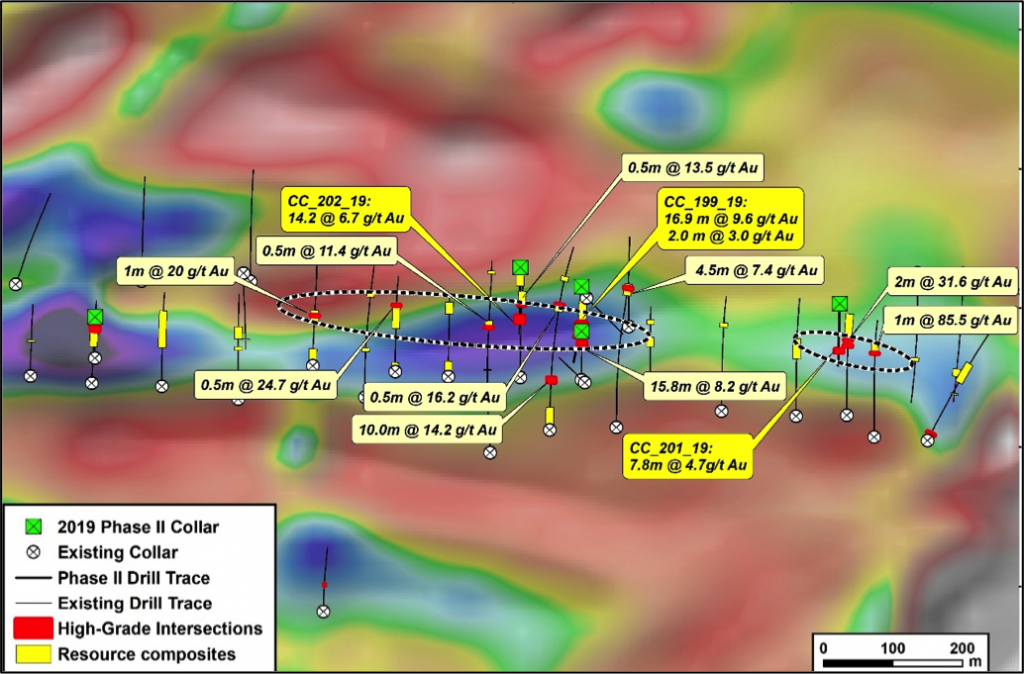
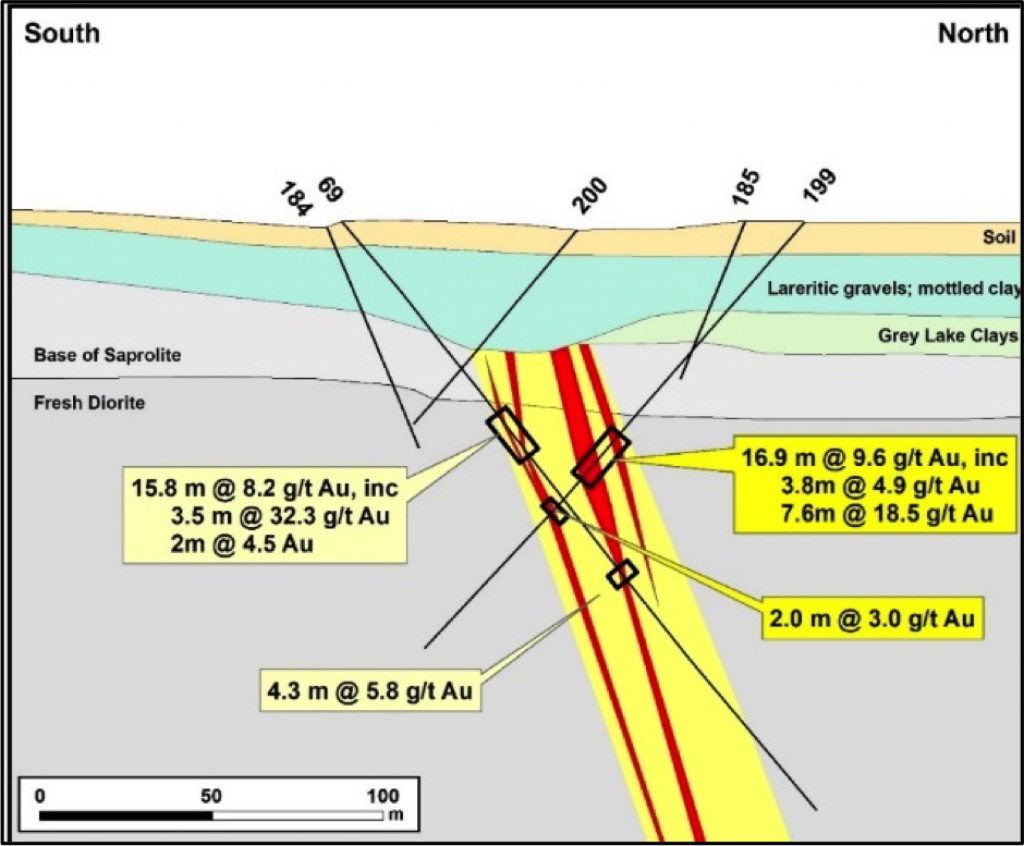
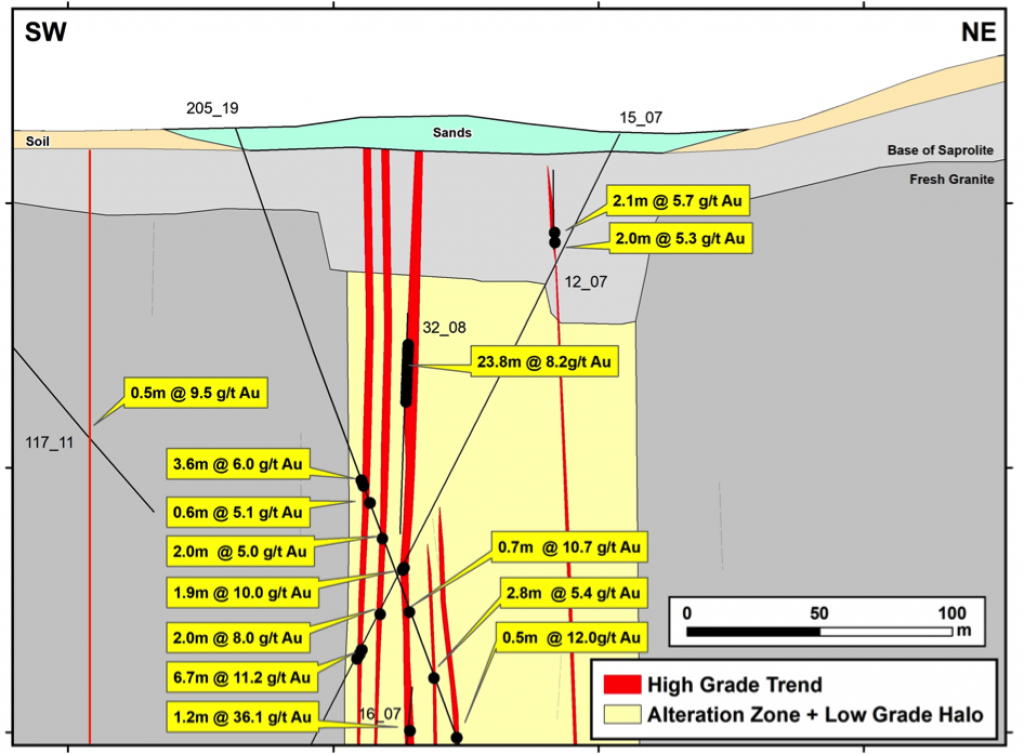
Gold mineralization is localized within shear zones which are in turn controlled by a large scale northwest-southeast striking lineament (the so-called Tocantinzinho trend), probably a crustal scale shear. The dimensions of the Central and Moreira Gomes deposits that had been sufficiently outlined by core drilling for mineral resource estimates in 2022 are as follows:

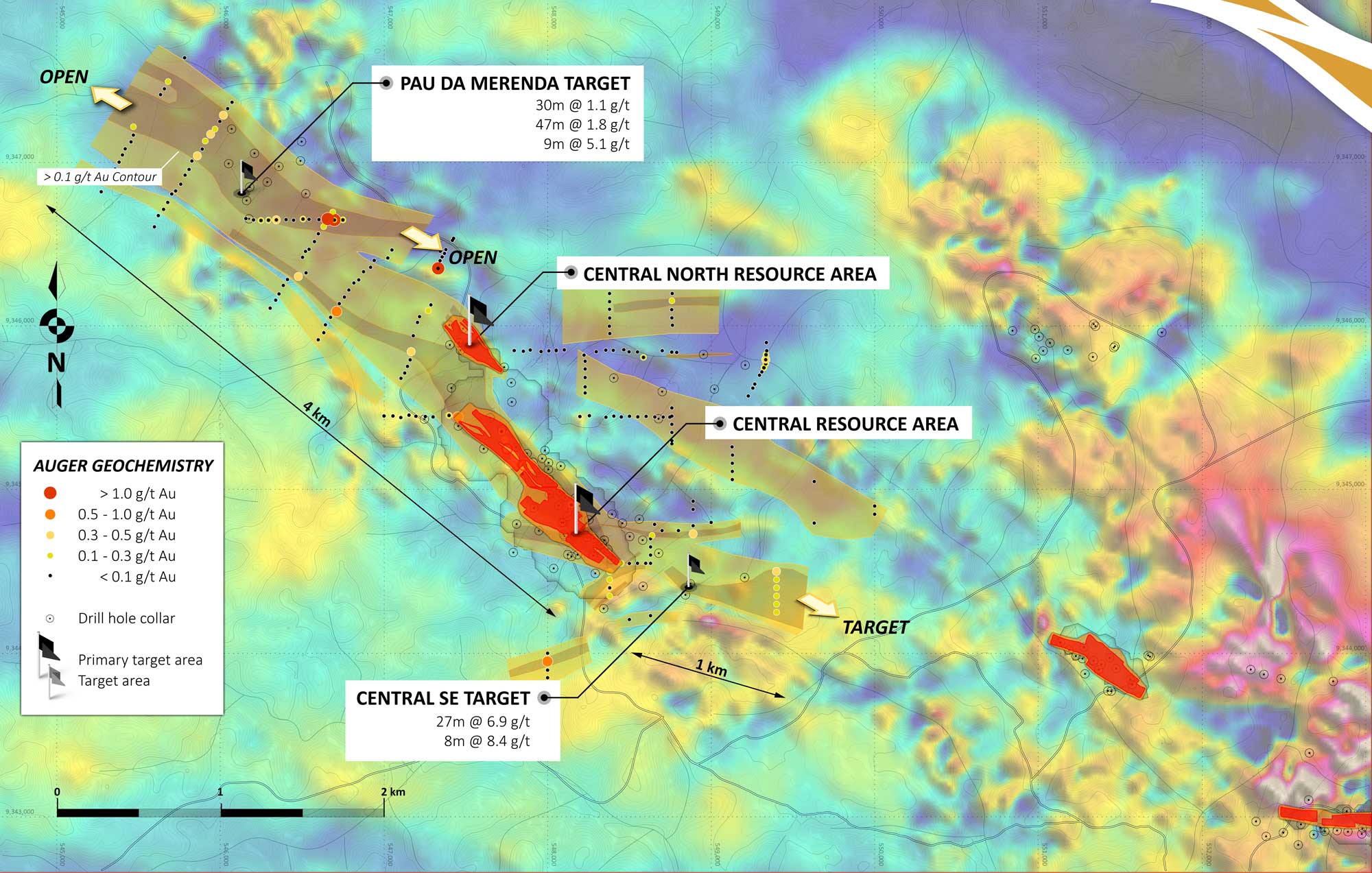
  • Central extends over a strike length of at least 800 m in a northwest-southeast direction, and is 50 to 70 m wide, with a maximum known vertical depth of 450 m.
  • Moreira Gomes extends over a strike length of 1,200 m east-west, is 30 to 50 m wide, and has a vertical depth of 400 m.
Image 1
Image 2
Image 3
Image 4
Image 5
Image 6
Image 7
Image 8
Image 1
Image 2
Image 3
Image 4
Image 5
Image 6
Image 7
Image 8

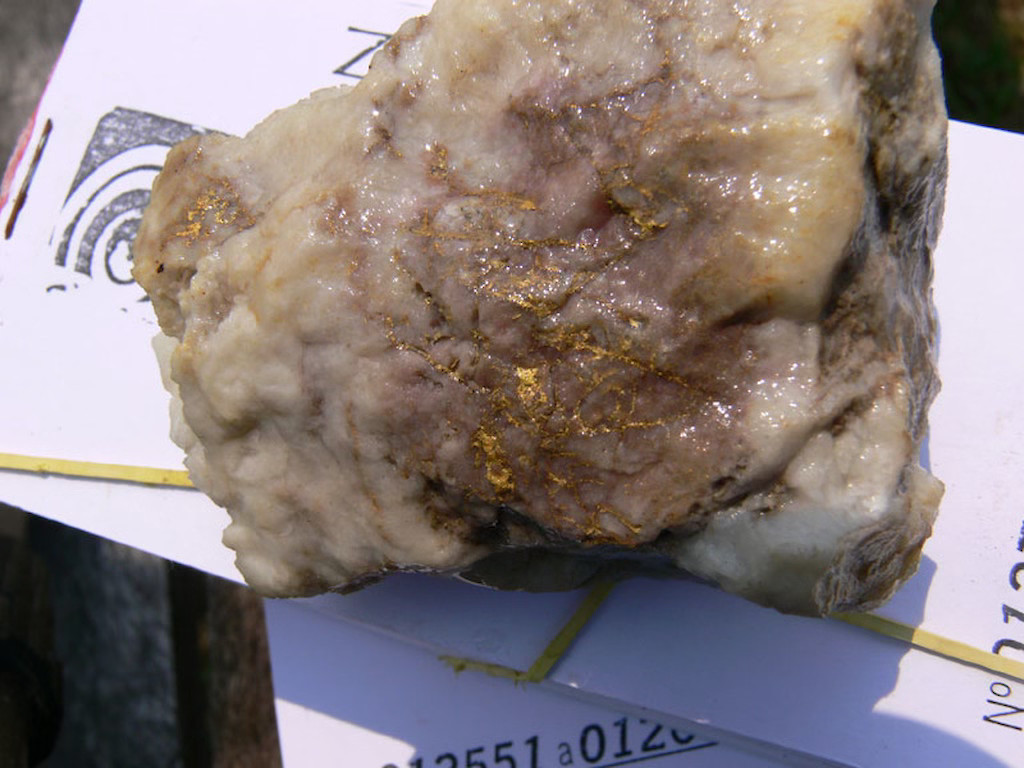
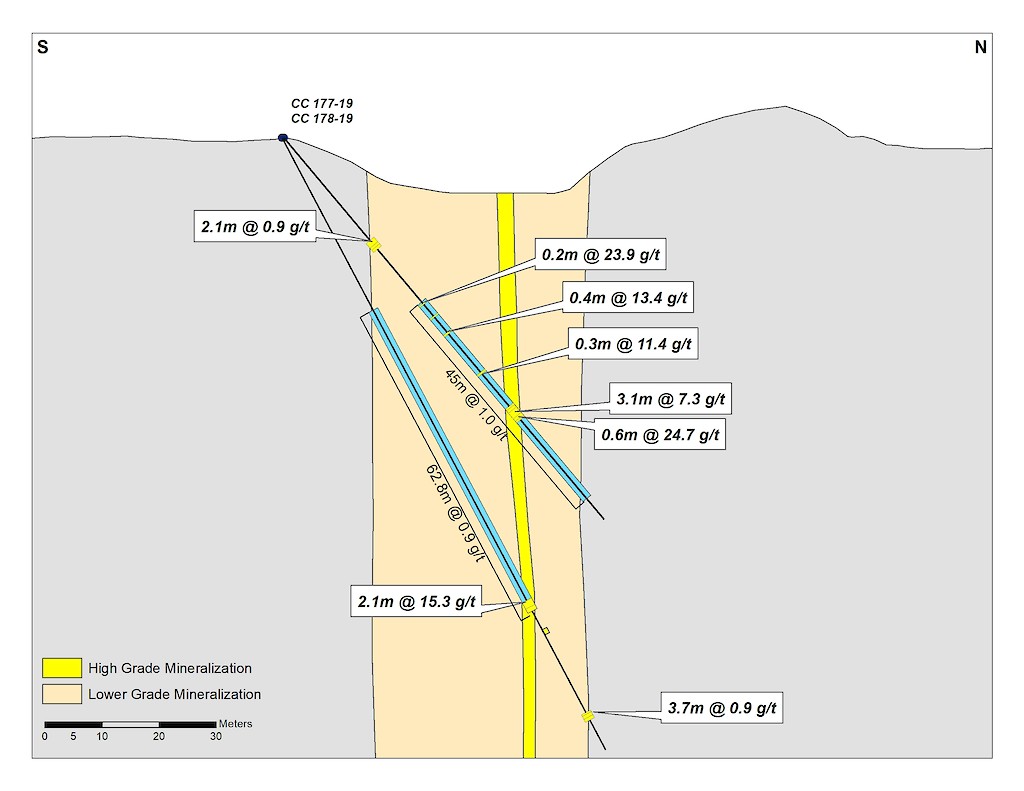
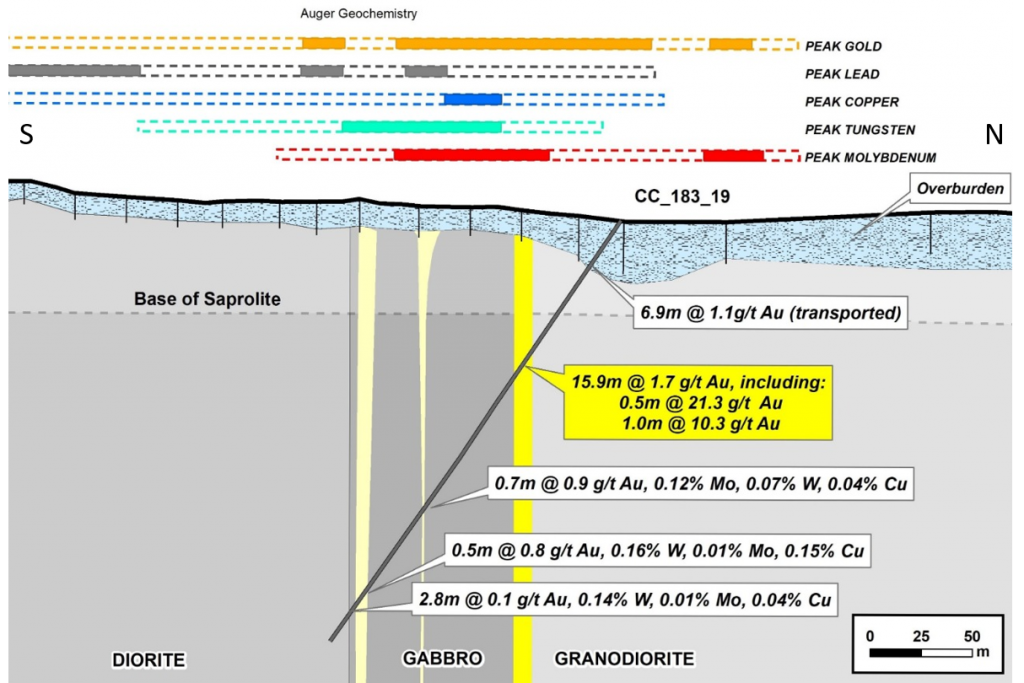
The Cuiu Cuiu District hosts vein and shear zone gold mineralization within a Proterozoic granitic basement. Mineralization styles include broad lower grade stockwork-style zones (typically grading 1-2g/t Au), and more discrete high-grade veins which can run to well in excess of several ounces per ton. Frequently mineralized structures coincide with the position of mafic dykes, which provide ductile shear planes in the more brittle granitoid host rocks. The crystalline basement itself consists of weakly magnetic granites to magnetite-rich diorites. Many of the higher-grade surface rock chip samples are associated with the more magnetite rich host rocks which border the Tocantinzinho lineament.

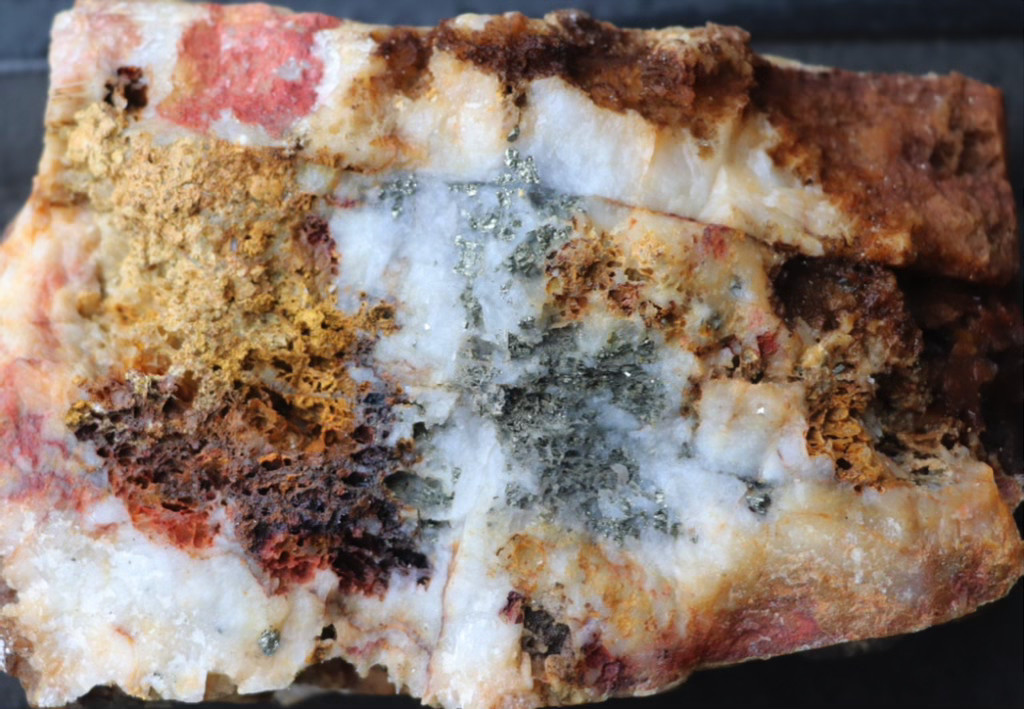
Known gold-bearing structures are typically oriented NW, E-W, and NE. Mineralized veins are transitional from compact white to grey quartz, to “dog-tooth” style banded quartz-carbonate veins (particularly in the E-W trending vein sets). Accessory sulphides include galena and sphalerite, and often pyrite (with pyrite extending into wall-rock halos). Wall-rock alteration typically consists of silca-sericite assemblages. Hematite alteration is also common, indicating the presence of fluids of various oxidation states.

The district mineralization style is considered to be “intrusive-related gold system” (IRGS). The metal assemblages in such systems is typically zoned, more distal deposits tend to be associated with lead-zinc sulphide assemblages, and areas closer to source showing variably Cu-Mo-W-Sn. The causative intrusions in the Cuiu Cuiu are yet to be identified, but the first campaigns of multi-element auger geochemistry and visual analysis of core points to their presence. Particularly in the Machichie area, mineralized veins display a more diverse assemblage of sulphides (which include coarse molybdenite, chalcopyrite, abundant pyrite). Scheelite is present in veins in wall-rock alteration. Veins can show a proportion of calcite and amethystine quartz.

Such intrusive related centres can be productive sources for diverse styles of gold mineralization, with for example the gold deposits in the Tintina Belt of north America or the Tasmanides of eastern Australia representing potential analogues.

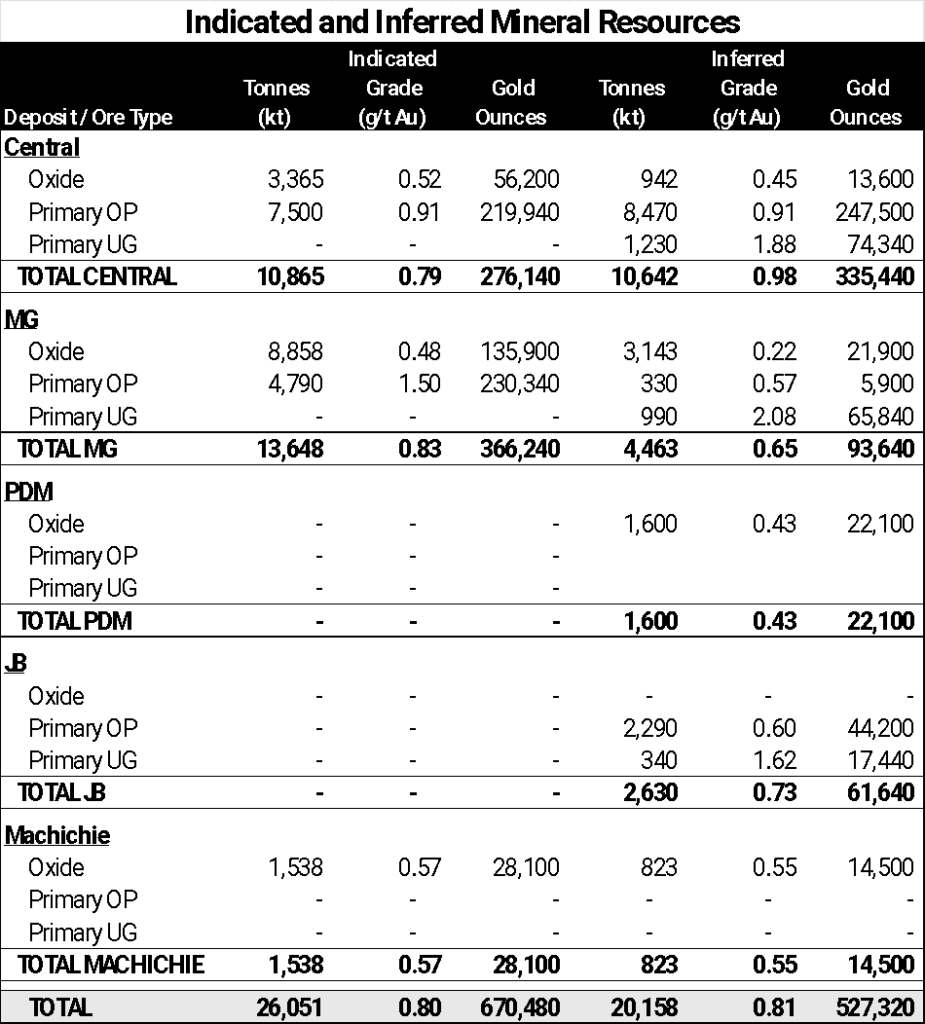
Three main gold deposits have so far been defined at the Cuiú Cuiú project which contain National Instrument (“NI”) 43-101 compliant Indicated resources of 12.29Mt @ 1.14 g/t gold (450,200oz) in fresh basement material and 13.56Mt @ 0.50 g/t gold (216,182oz) in oxide material. The project also contains Inferred resources of 13.63Mt @ 1.04 g/t gold (455,100oz) in fresh basement material and 6.4Mt @ 0.34 g/t gold (70,569oz) in oxide material. The resource estimate for the primary material is based on the NI 43-101 technical report dated October 12, 2022. The resource estimate for the oxide material at PDM and MG is based on a NI 43-101 technical report dated October 21, 2024. The resource estimate for the oxide material at Central and Machichie is based on a NI43-101 technical report (“Updated PFS”) dated July 29, 2025.